

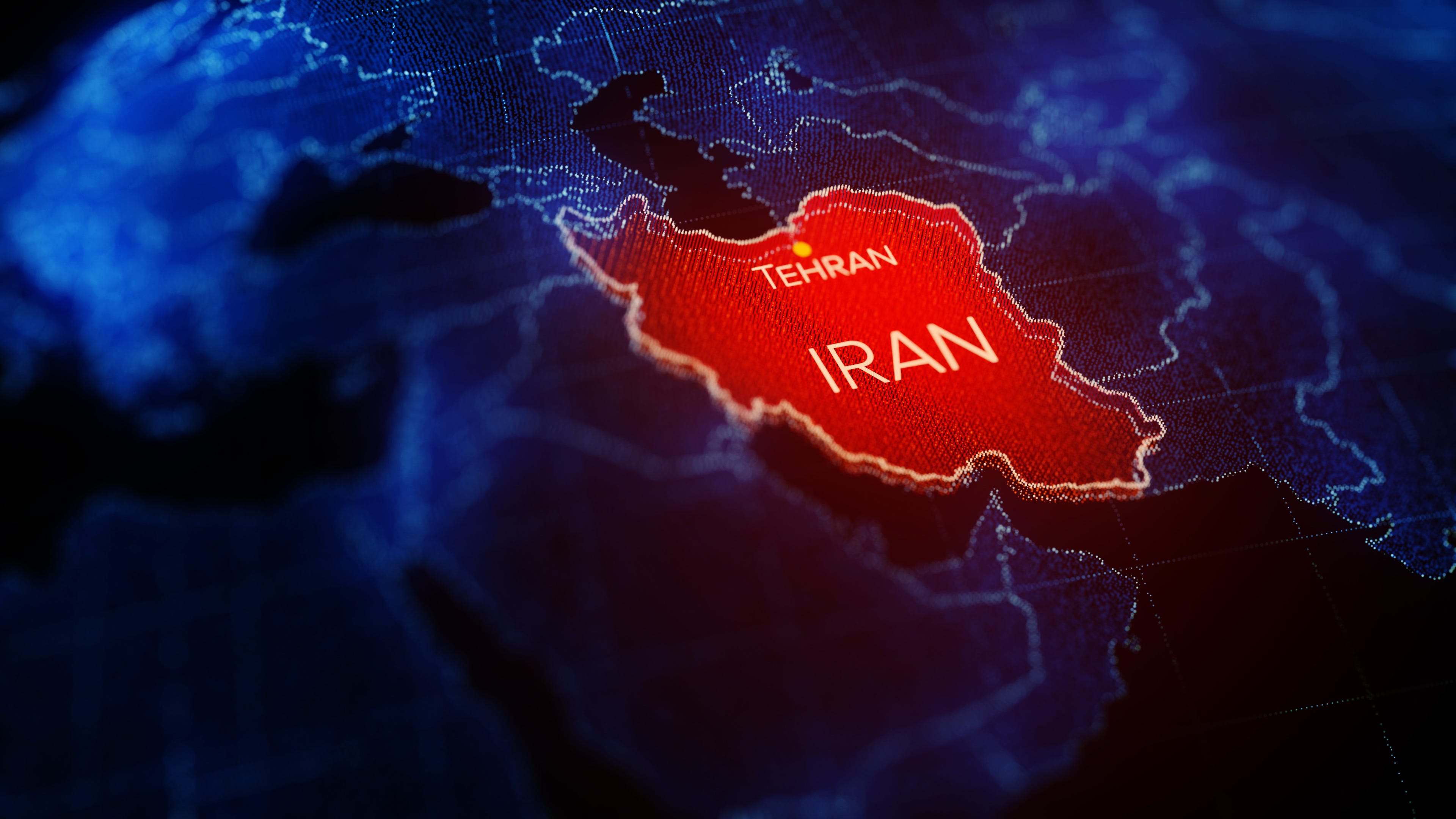
As members of America’s Delta Force and Special Operations Aviation Regiment (appropriately named “Night Stalkers”) snatched Venezuelan President Maduro from bed in Caracas January 3, protests in Iran were already approaching their second week. Shopkeepers shuttered their businesses to protest the collective impact of corruption, inflation, international sanctions, and cuts to price supports on basic commodities.
As with other mass demonstrations in Iran over the last two decades—in 2009 (Green Revolution), 2017, 2019, and 2022 (following the death in custody of Mahsa Amini, a young arrested for neglecting her headscarf)—protests have spread to cities across Iran. As before, those protests have zeroed in on the regime itself, not just its failings.
Some demonstrators today seem more brazen, chanting “Death to (Supreme Leader) Khamenei.” In a media moment echoing Tiananmen Square, a lone man pulled his shirt over his head while facing an overpowering line of police on motorcycles. There are placards on which are written “No to Gaza and Hamas” and “No to Hezbollah”—both a critique of waste, and the futility of Iran’s proxy wars abroad.
Israeli PM Netanyahu predictably called upon Trump to strike the regime. Trump, meanwhile, has said—presumably with some intention—that he is “locked and loaded” to defend the protesters if the regime attacks them. Various protest graffiti written in English seem to take him up on the offer: “Save us Trump!” While some might be tempted to see in Trump’s offer of “protection” vs. direct threats against the regime, a nod to Iranians’ deep-seated sensitivities to external intervention (with which the United States has a particularly sordid past), it’s likely more about Trump than Iran.
Then you have this: a highly polished op-ed January 6 by Reza Pahlavi, son of the late Mohammed Reza Shah, in The Washington Post, proclaiming Iran’s moment of change and offering himself, not as a new leader but as a steward of a transition to better days.
What’s happening here?
While the current regime crackdown has been violent—potentially hundreds killed, and thousands arrested—it could get considerably more so. And while Khamenei might have a well-furnished dacha waiting for him in the Moscow suburbs, the bulk of the Basij do not. The exit could, as it did with Assad, come swiftly—if Khamenei feels the tide has irreversibly turned, or that he has a narrow window in which to choose between a flight to Russia and an Israeli missile.
We don’t know if the protests will follow the same cycle as in previous years. But there are some notable differences, as the power dynamic appears to have shifted somewhat. Iran’s support for Hamas turned out very badly for both Hamas and Hezbollah in Lebanon, and ultimately, the regime itself. American strikes on Iran’s nuclear facilities were another deep embarrassment to the regime, as was the Iranian missile feint against the U.S. base at Al Udeid in Qatar in 2025.
The general perception in Iran is that the Supreme Leader, who is 86, is neither fully in control of his faculties nor the regime. Reports of an alleged “escape plan” that would deliver Khamenei and his inner circle to Moscow are attributed to anonymous sources—adding support to the possibility of a campaign to make the regime look particularly weak. In all likelihood, we are looking at some late-stage segment of the long final act of the Iranian regime—accelerated dramatically by Iran’s miscalculations regarding Gaza and the Israeli response.
What will Trump do next?
Venezuela likely exacerbates the worry within Khamenei’s inner circle that the U.S. and Israel are coming in for the kill, and could precipitate the above “Plan B,” if it exists, particularly if it’s in Putin’s interest to be seen playing protector.
Iran’s current predicament is a gift for Trump, in the sense that he doesn’t have to do much more than threaten support for the Iranian people against the regime to get credit both within Iran, and with all those in the US who have argued for harsher action towards Iran for decades. This is credit Trump may, whether by design or not, use to counterbalance the problematic optics of appropriating or borrowing Venezuela, or Greenland.
The longer-term effect:
The bigger question for Iran and the region, in the long term, is what happens the day after the mullahs are gone. Reza Pahlavi’s references to not repeating the mistakes of the second Iraq invasion notwithstanding, there isn’t much evidence of a comprehensive post-revolution plan to govern Iran, or the capacity or willingness of any major country or bloc, from the U.S. to the EU, to assist in a substantive way with reconstruction and stabilization. The history of Middle East revolutions has not been positive. While Iran isn’t identical to Iraq or Yemen, we might wind up with another highly unstable situation, or a lengthy stalemate (as is likely in Gaza) — or both.
The Middle East-Told Slant offers a non-partisan, practitioner’s perspective on Middle East politics, conflict, and culture. Written by a former US diplomat with 25+ years of regional experience, author of “Benghazi: A New History“ (Hachette, 2022) and Exit the Colonel (Public Affairs, 2008), and Translating Libya (Darf, 2015). Each week, I share analysis on current events, historical context, and cultural insights from the region, drawing on my experience in government, business, and academia across the Middle East.
To receive weekly posts and support independent journalism on the Middle East, consider becoming a free or paid subscriber. Paid subscribers receive a complimentary copy of any of my books (a value equal to the annual subscription — DM me to redeem).
So sorry to catch up with this only now, Ethan. So much has gone on this month that who knows what comes next is anyone's guess.
Things are truly desperate when the resisters are looking to replace their decrepit, moribund leadership by calling for a decrepit, moribund president for the liberation. The point you make about the longer-term effect - that there doesn't seem to be a post-theocratic regime plan even emerging, let alone positioning in place - is worrying, and I'm not sure that Reza Pahlavi, as well-meaning as he may be, is an answer, as his presence on the scene may have too much of the scent of his father's autocratic regime simply returning to replace the current autocratic regime...which had emerged to replace his father's regime. Add Trump to the mix, and there's the likelihood of a corrupt scene to overwhelm whatever progressivism there is - perhaps a Middle Eastern equivalent of post-Soviet Russia in the 1990s, when the confusion in the haste of the transition gave rise to the criminal elements that have run rampant ever since.
What is needed is someone like an Iranian Lech Walesa. Someone with the moral gravity and political skill, plus the charisma and ability to project this as a package on the world stage. Is there anyone remotely up to the task?
Thanks Ethan, good read.