The Iran War’s Long Fuse
The conflict has ratcheted up another notch without a clean outcome. How did we get here?


It’s Tuesday, April 14. Islamabad-hosted talks between the US and Iran have ended without a deal. Iran is claiming sovereignty over the Strait of Hormuz and charging tolls on passage. The US has responded by blockading Iranian ports , a move that targets Iranian oil exports but leaves the toll system untouched. Iran could theoretically recoup up to 20% of its lost oil revenue through tolls, but that’s not nearly enough to relieve its cratered economy, and even that is a stretch. Trump could be betting that maximum pressure, combined with massive damage to Iran’s administrative and military infrastructure, could prompt new mass protests. But domestic and global economic and political pressures continue to mount. It’s a big bet.
The war has a long fuse, and it is worth tracing where it was lit.
The roots go back to the 1979 Islamic Revolution. The conflict is not strictly speaking “sectarian” — a replay of the centuries-old schism between Shia and Sunni Islam. Iran had been on good terms with both Israel and many Arab states prior to the revolution. In power, the radical Islamist followers of Ayatollah Khomeini created an ideological construct that demonized both Israel and the Arabs, and took up the cause of the Palestinians as a weapon against both camps. The Iran-Arab animosity deepened with the Iran-Iraq War of the 1980s — the first major modern conflict to threaten Gulf navigation and oilfields. It was in this crucible that Iran’s strategy of building regional proxy militias was born.
Iran’s Proxy Network – Via Sudan
Almost immediately after taking power, the Islamic Republic set about building and funding armed groups across the region. Hezbollah took shape in the early 1980s under the cover name “Islamic Jihad,” claiming responsibility for the 1983 bombing of the US Marine barracks in Beirut that killed 241 American service members on IRGC orders. Hamas emerged in the late 1980s during the First Palestinian Intifada. From the beginning, Iran framed its proxy support in terms of confronting Israeli aggression.
The proxy network found an unexpected node of convergence in Africa. As the mujahideen war in Afghanistan wound down, Osama bin Laden moved to Khartoum around 1991–92, where Hassan Turabi’s shadow Islamic dictatorship had made Sudan a “Star Wars cantina” for global jihadist movements. Through his international Islamist convocations, Turabi introduced Iranian intelligence operatives to bin Laden and members of Hamas — a convergence with whose consequences we are still living. Meanwhile, Israel expelled various Palestinian militants to Lebanon, where they made parallel contact with Iran-backed Hezbollah.
It was against this backdrop of hardening alignments that the Oslo Accords emerged. Secret negotiations briefly offered a plausible path to peace and a two-state solution. Israeli PM Yitzhak Rabin and Yasser Arafat shook hands on the White House lawn in August 1993.
But Hamas and Palestinian Islamic Jihad tried to torpedo the accords with suicide attacks, backed in several cases by Iran. Benjamin Netanyahu developed his thesis that Iran was Israel’s real threat and the Palestinians effectively a secondary concern. Right-wing opponents of Oslo were later charged with inciting violence against Rabin in particular. Rabin was assassinated at a peace rally in Tel Aviv in 1995 — not by an Arab, but by a right-wing Jew of Yemeni origin. The peace process never recovered. The depth of the Iran-Palestinian operational relationship was confirmed in 2002, when Israeli commandos intercepted the Karine A — a freighter carrying Iranian rockets and weapons bound for Gaza — in a nighttime naval commando raid in the Red Sea near the Straits of Tiran. George W. Bush ended contact with Arafat’s Palestinian Authority entirely. The episode, and Rabin’s murder, exposed the depth of the counter-peace alliances that had been building for years.
From the Nuclear Deal to the Abraham Accords
Two parallel developments shaped the decade that followed. Qatar significantly deepened its financial and political support for Hamas. Netanyahu, meanwhile, advanced the thesis that striking Iran’s nuclear program was Israel’s defining strategic imperative, and that Palestinians’ status was therefore inconsequential (the implications are clear). It was a thesis he would spend the next two decades trying to hard-code into American policy.
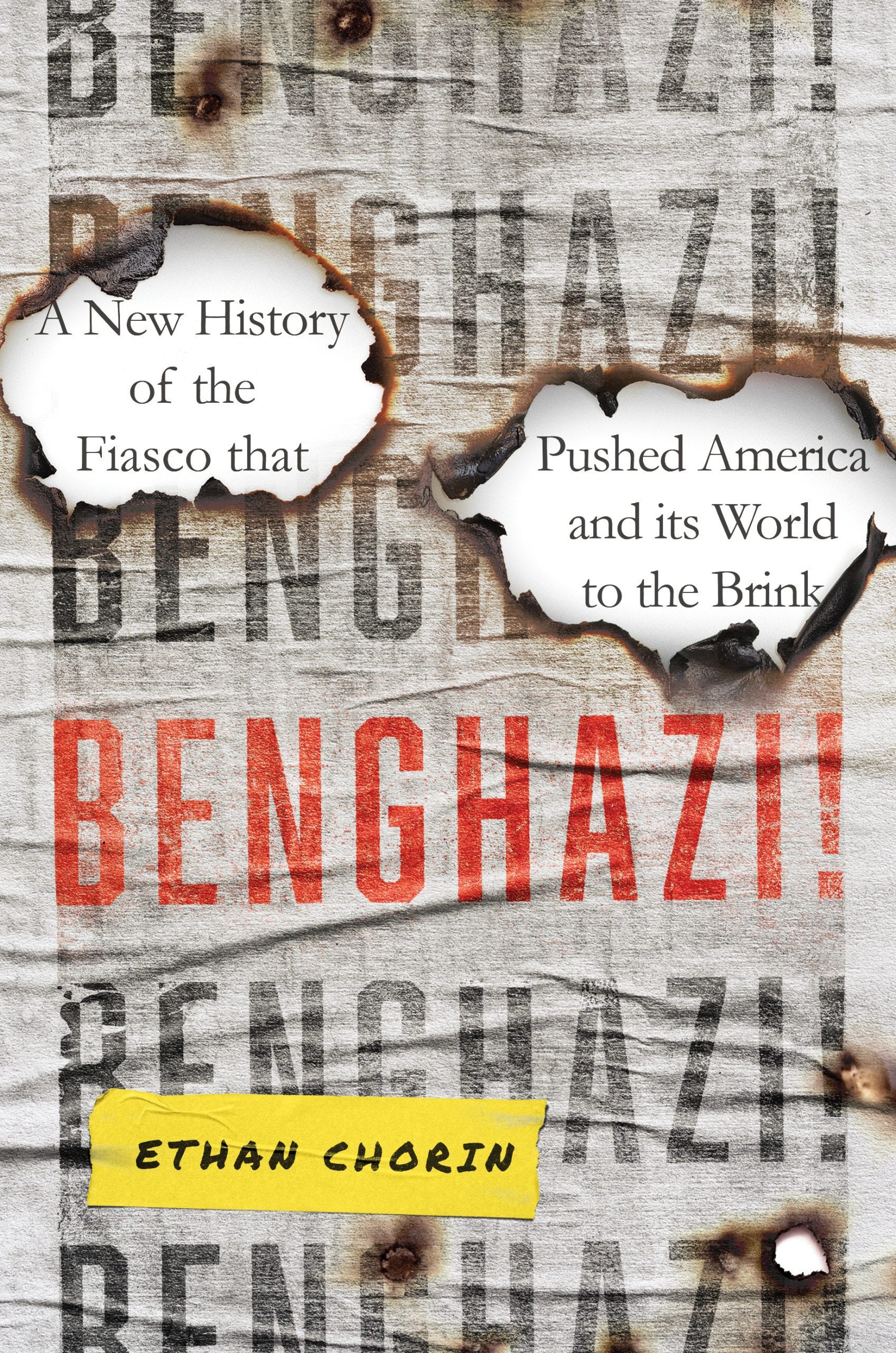
Obama’s 2015 Iran nuclear deal (aka, the JCPOA) was sound within the text of the agreement itself. But its focus on nuclear arrangements in isolation was also its central vulnerability. The decision-making paralysis that followed the 2012 attack on the US mission in Benghazi, Libya (I describe this in detail in Benghazi: A New History) had already made risk aversion the defining reflex of American Middle East policy, and Iran was exhibit A: don’t derail, don’t give domestic opponents a pretext to criticize, and protect the outcome at all costs.
With the US effectively sidelined, Iran’s support for the Houthis in Yemen, Shia militias in Iraq (where the US overthrow of Saddam Hussein had already destroyed the main bulwark against Iranian influence), Hezbollah in Lebanon, and Hamas in Gaza accelerated sharply throughout this period, an expansion that would eventually spill into the Red Sea. Trump’s maximum pressure instinct was the right diagnosis of what had gone wrong. But the pendulum swung too hard and too late for a clean outcome. Withdrawal from the JCPOA without a replacement left the nuclear question unresolved while the regional confrontation accelerated.
Following the killing of a US contractor and an attack on the US Embassy in Baghdad, Trump authorized the killing — on a controversial “imminent threat” provision — of Revolutionary Guards commander Qassim Soleimani by drone outside Baghdad airport in January 2020.
While Trump proceeded to design a “Deal of the Century” to resolve the Palestinian-Israeli conflict, Netanyahu had other ideas, pushing forward a unilateral annexation of parts of the West Bank. A last minute UAE proposal to normalize relations with Israel in exchange for a promised shelving of annexation provided the opening for a very different kind of agreement — the Abraham Accords, which was ultimately signed by Israel with the UAE, Bahrain, Morocco, and Sudan, and reflected the convergence of Gulf and Israeli economic and security interests, with the Palestinian question set aside until the conditions were more propitious. Netanyahu’s right-wing base wanted annexation; normalization was second-prize. And the expiration date was fast advancing.
Here the enabling architecture becomes critical, and extraordinarily cynical. Netanyahu had quietly maintained Qatari cash flows into Gaza, keeping Hamas’s governing apparatus functional, on the theory that a Hamas-controlled Gaza would prevent the Palestinian Authority from unifying Palestinian political representation and strengthening the case for a Palestinian state. Netanyahu is currently on trial for corruption, and two of his closest aides have been arrested on suspicion of acting as paid Qatari agents. None of them fully anticipated what came next.
October 7’s Chaotic Logic
October 7 was almost certainly designed to blow up the Abraham Accords at their most consequential moment: when Saudi-Israeli normalization, the framework’s anchor, was closest to being finalized. It succeeded. Hamas killed some 1,200 men, women, and children and took 251 hostages of several nationalities. Hamas’s operations commander Yahya Sinwar clearly understood what he was doing. He not only targeted the normalization process that would have permanently foreclosed the strategic utility of the Palestinian cause: he goaded Israel into what he clearly understood would be a reputation-harming overreaction. And he hoped it would be fatal. Iran backed the effort militarily, and Qatar supplied the funds — in an astounding twist, with Netanyahu’s blessing.
The escalation that followed should not have been a surprise, as it was the logical conclusion of decades of machinations on all sides. Since Netanyahu’s defining political message had always been that Iran was the root of all threats, the glide path from Gaza to direct confrontation with Iran was built into his strategic logic from the beginning. After more than a year of bombing Gaza, the war expanded — first to Hezbollah in Lebanon, then to direct strikes on Iran’s nuclear sites and ballistic missile infrastructure.
Where We Are Now
The fuse hit the explosive on February 28, 2026, when the United States and Israel struck Iran directly, assassinated its supreme leader, and set in motion the events now playing out in the Strait of Hormuz, which have the air of a final act, or at least, a transition to a new reality.
Iran took the war to its Arab Gulf neighbors, including Qatar — and Oman, the perpetual US-Iran mediator. In Qatar it struck Al Udeid Air Base, the forward headquarters of US Central Command, and Ras Laffan, Qatar’s main LNG processing facility, which supplies roughly 20% of global LNG exports and sits atop the gas field Qatar and Iran share. Iran officially denied striking Oman, claiming rogue military units were acting independently, but the strikes continued regardless. Part of the IRGC structure was no doubt sending a message that hosting American military infrastructure while maintaining ties with Tehran came with a cost.
Iran has since asserted sovereignty over the Strait of Hormuz, demanding transit coordination through Iranian naval authorities and charging tolls of up to $2 million per vessel. After peace talks in Islamabad collapsed on April 12, the US imposed a naval blockade of Iranian ports. The blockade targets Iran’s oil exports specifically, while leaving Iran’s ad hoc toll system unaddressed in any legal sense. The ceasefire brokered by Pakistan remains technically in force until April 22, even as both sides accuse the other of violations.
Iran is weaker than at any point since the 1979 revolution. But so far, it retains great influence if not complete control over the world’s most important oil chokepoint. It can sustain that influence at acceptable cost to itself, perhaps for months, as damage to the rest of the world accumulates. In the history of wargaming on Iran, US military strategists must have anticipated this outcome repeatedly, as certainly had the Iranians in reverse. Maybe in this case, it was deemed an acceptable risk.
The most elegant solution to the current quandary may be a regional, Arab-Muslim security framework that brings Iran in as a participant rather than a defeated party — one that caps its nuclear ambitions, restores freedom of navigation, and ties Iran to the region’s economic future rather than to China and Russia. Whether any of the affected parties, Iran first and foremost, will agree to that, remains to be seen.
The Middle East-Told Slant offers a non-partisan, practitioner’s perspective on Middle East politics, conflict, and culture. Written by a former US diplomat with 25+ years of regional experience, author of “Benghazi: A New History“ (Hachette, 2022) and Exit the Colonel (Public Affairs, 2008), and Translating Libya (Darf, 2015). Each week, I share analysis on current events, historical context, and cultural insights from the region, drawing on my experience in government, business, and academia across the Middle East.
To receive weekly posts and support independent writing on the Middle East, consider becoming a free or paid subscriber. Paid subscribers receive a complimentary copy of any of my books (a value equal to the annual subscription — DM me to redeem).